
The music mogul-turned-entrepreneur says the biggest threat to African growth isn't a lack of resources—it’s the rigid borders separating neighbors.
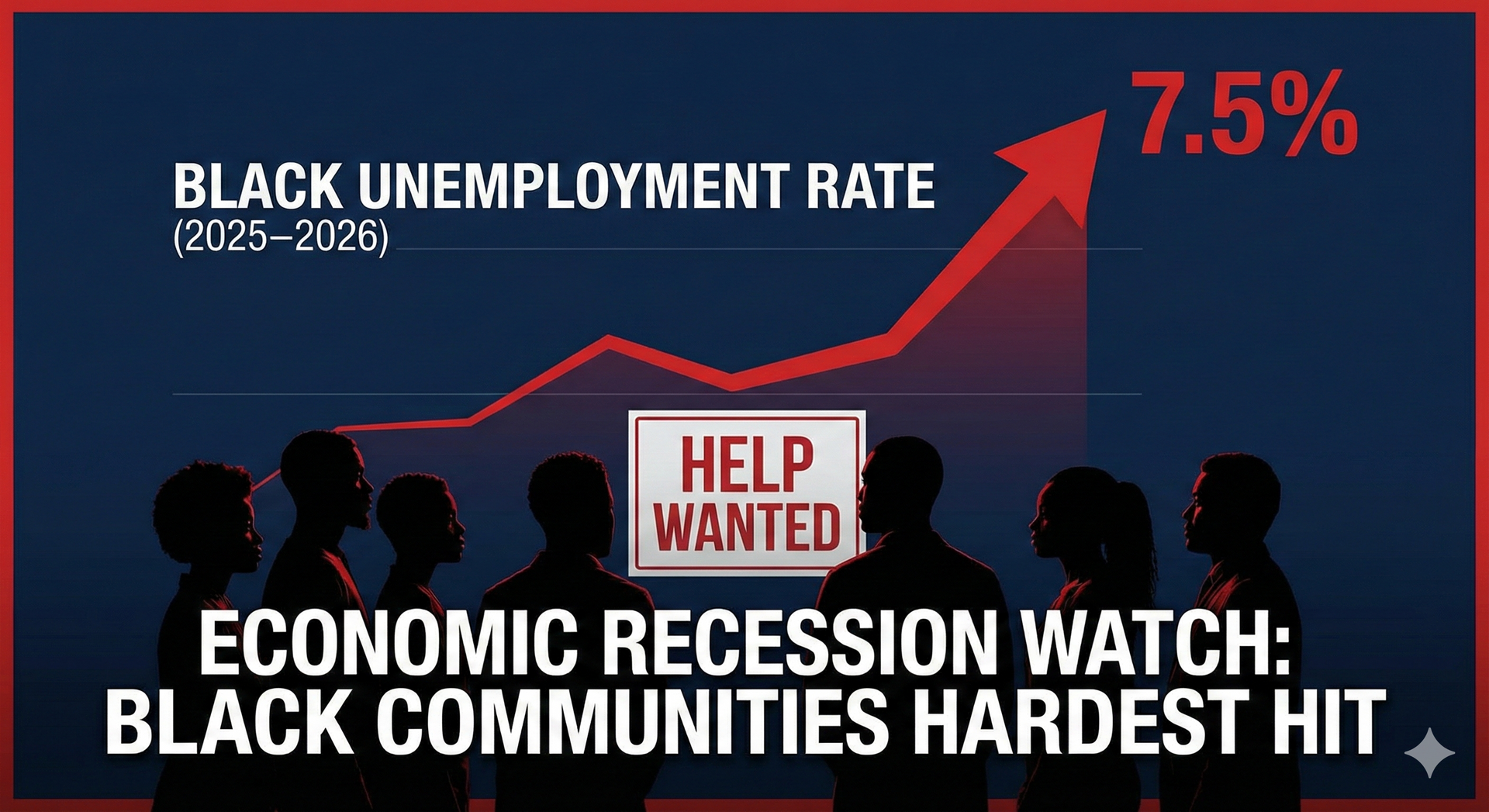
By Jan 2026, Black unemployment hit 7.5% (vs. ~4% national average), a stark increase signaling a specific "Black Recession."

The numbers are in, and they are sobering. In 2024, the share of venture capital (VC) funding going to Black founders dropped to a multi-year low of just 0.4% (roughly $730 million out of billions). The "post-2020 pledge" era is over; the checkbooks have closed. But stopping at that statistic is a defeatist mindset. The money is out there—you just have to look where the flash isn't. The Rise of CDFIs Community Development Financial Institutions (CDFIs) are the sleeping giants of Black business funding. Unlike traditional banks that look at your credit score, or VCs that look for a "unicorn" exit, CDFIs are mission-driven lenders certified by the US Treasury to help underserved communities. Organizations like the Black Business Investment Fund (BBIF) or Hope Credit Union are designed to say "yes" when Chase or Wells Fargo says "no." Grants > Loans With interest rates still fluctuating in 2025, debt is expensive. Prioritize non-dilutive capital (money you don't have to pay back). The trick: Stop looking for "general" business grants. Niche down. innovative grants for "Black women in tech," "minority culinary owners," or "urban agriculture" are less competitive. Resource: Check the Hello Alice and IFundWomen databases weekly. Crowdfunding as Validation Platforms like Honeycomb Credit or Buy The Block allow you to raise capital from your community. This kills two birds with one stone: you get the cash you need, and you prove to future investors that you have a loyal customer base willing to bet on you. Key Takeaway: Stop chasing VCs who don't understand your culture or your market. Build a relationship with a local CDFI officer this month—they are your bridge to sustainable capital.

The "grind" is glorified in our culture. We praise the sleepless nights and the "team of one" mentality. But in 2025, the goal isn't just to be busy—it's to be profitable without doing everything yourself. According to the 2024 census data, while Black entrepreneurs account for nearly 10% of all US businesses, the vast majority are solopreneurs with zero employees. To close the wealth gap, we have to bridge the scaling gap. The "Super-Producer" Trap Many Black founders fall into the trap of being a "Super-Producer"—you are the best at what you do (baking, coding, consulting), so you fear delegating. But you cannot scale a business if you are the bottleneck. Scaling requires moving from doing the work to designing the systems that do the work. Automate Before You Hire. Before you take on the payroll burden, look at your tech stack. In 2025, AI is the great equalizer. Tools like ChatGPT for customer service scripts, Zapier for workflow automation, and QuickBooks for finances are cheaper than a human assistant. If a task is repetitive (e.g., invoicing), automate it. If it requires critical thinking, then hire for it. The First Hire : Admin vs. Revenue A common mistake is hiring a clone of yourself. Instead, hire for your weakness. The "Buying Back Time" Hire: An Executive Assistant or Operations Manager. They handle the inbox and scheduling so you can focus on sales. The "Revenue" Hire : A salesperson or marketing lead. This person should pay for themselves within 3–6 months by bringing in new business. Key Takeaway : You are not a CEO until the business can function for a week without you. Your goal for this year is to fire yourself from at least three daily tasks.
The music mogul-turned-entrepreneur says the biggest threat to African growth isn't a lack of resources—it’s the rigid borders separating neighbors.
By Jan 2026, Black unemployment hit 7.5% (vs. ~4% national average), a stark increase signaling a specific "Black Recession."
The numbers are in, and they are sobering. In 2024, the share of venture capital (VC) funding going to Black founders dropped to a multi-year low of just 0.4% (roughly $730 million out of billions). The "post-2020 pledge" era is over; the checkbooks have closed. But stopping at that statistic is a defeatist mindset. The money is out there—you just have to look where the flash isn't. The Rise of CDFIs Community Development Financial Institutions (CDFIs) are the sleeping giants of Black business funding. Unlike traditional banks that look at your credit score, or VCs that look for a "unicorn" exit, CDFIs are mission-driven lenders certified by the US Treasury to help underserved communities. Organizations like the Black Business Investment Fund (BBIF) or Hope Credit Union are designed to say "yes" when Chase or Wells Fargo says "no." Grants > Loans With interest rates still fluctuating in 2025, debt is expensive. Prioritize non-dilutive capital (money you don't have to pay back). The trick: Stop looking for "general" business grants. Niche down. innovative grants for "Black women in tech," "minority culinary owners," or "urban agriculture" are less competitive. Resource: Check the Hello Alice and IFundWomen databases weekly. Crowdfunding as Validation Platforms like Honeycomb Credit or Buy The Block allow you to raise capital from your community. This kills two birds with one stone: you get the cash you need, and you prove to future investors that you have a loyal customer base willing to bet on you. Key Takeaway: Stop chasing VCs who don't understand your culture or your market. Build a relationship with a local CDFI officer this month—they are your bridge to sustainable capital.
The "grind" is glorified in our culture. We praise the sleepless nights and the "team of one" mentality. But in 2025, the goal isn't just to be busy—it's to be profitable without doing everything yourself. According to the 2024 census data, while Black entrepreneurs account for nearly 10% of all US businesses, the vast majority are solopreneurs with zero employees. To close the wealth gap, we have to bridge the scaling gap. The "Super-Producer" Trap Many Black founders fall into the trap of being a "Super-Producer"—you are the best at what you do (baking, coding, consulting), so you fear delegating. But you cannot scale a business if you are the bottleneck. Scaling requires moving from doing the work to designing the systems that do the work. Automate Before You Hire. Before you take on the payroll burden, look at your tech stack. In 2025, AI is the great equalizer. Tools like ChatGPT for customer service scripts, Zapier for workflow automation, and QuickBooks for finances are cheaper than a human assistant. If a task is repetitive (e.g., invoicing), automate it. If it requires critical thinking, then hire for it. The First Hire : Admin vs. Revenue A common mistake is hiring a clone of yourself. Instead, hire for your weakness. The "Buying Back Time" Hire: An Executive Assistant or Operations Manager. They handle the inbox and scheduling so you can focus on sales. The "Revenue" Hire : A salesperson or marketing lead. This person should pay for themselves within 3–6 months by bringing in new business. Key Takeaway : You are not a CEO until the business can function for a week without you. Your goal for this year is to fire yourself from at least three daily tasks.
The music mogul-turned-entrepreneur says the biggest threat to African growth isn't a lack of resources—it’s the rigid borders separating neighbors.
By Jan 2026, Black unemployment hit 7.5% (vs. ~4% national average), a stark increase signaling a specific "Black Recession."
The numbers are in, and they are sobering. In 2024, the share of venture capital (VC) funding going to Black founders dropped to a multi-year low of just 0.4% (roughly $730 million out of billions). The "post-2020 pledge" era is over; the checkbooks have closed. But stopping at that statistic is a defeatist mindset. The money is out there—you just have to look where the flash isn't. The Rise of CDFIs Community Development Financial Institutions (CDFIs) are the sleeping giants of Black business funding. Unlike traditional banks that look at your credit score, or VCs that look for a "unicorn" exit, CDFIs are mission-driven lenders certified by the US Treasury to help underserved communities. Organizations like the Black Business Investment Fund (BBIF) or Hope Credit Union are designed to say "yes" when Chase or Wells Fargo says "no." Grants > Loans With interest rates still fluctuating in 2025, debt is expensive. Prioritize non-dilutive capital (money you don't have to pay back). The trick: Stop looking for "general" business grants. Niche down. innovative grants for "Black women in tech," "minority culinary owners," or "urban agriculture" are less competitive. Resource: Check the Hello Alice and IFundWomen databases weekly. Crowdfunding as Validation Platforms like Honeycomb Credit or Buy The Block allow you to raise capital from your community. This kills two birds with one stone: you get the cash you need, and you prove to future investors that you have a loyal customer base willing to bet on you. Key Takeaway: Stop chasing VCs who don't understand your culture or your market. Build a relationship with a local CDFI officer this month—they are your bridge to sustainable capital.
The "grind" is glorified in our culture. We praise the sleepless nights and the "team of one" mentality. But in 2025, the goal isn't just to be busy—it's to be profitable without doing everything yourself. According to the 2024 census data, while Black entrepreneurs account for nearly 10% of all US businesses, the vast majority are solopreneurs with zero employees. To close the wealth gap, we have to bridge the scaling gap. The "Super-Producer" Trap Many Black founders fall into the trap of being a "Super-Producer"—you are the best at what you do (baking, coding, consulting), so you fear delegating. But you cannot scale a business if you are the bottleneck. Scaling requires moving from doing the work to designing the systems that do the work. Automate Before You Hire. Before you take on the payroll burden, look at your tech stack. In 2025, AI is the great equalizer. Tools like ChatGPT for customer service scripts, Zapier for workflow automation, and QuickBooks for finances are cheaper than a human assistant. If a task is repetitive (e.g., invoicing), automate it. If it requires critical thinking, then hire for it. The First Hire : Admin vs. Revenue A common mistake is hiring a clone of yourself. Instead, hire for your weakness. The "Buying Back Time" Hire: An Executive Assistant or Operations Manager. They handle the inbox and scheduling so you can focus on sales. The "Revenue" Hire : A salesperson or marketing lead. This person should pay for themselves within 3–6 months by bringing in new business. Key Takeaway : You are not a CEO until the business can function for a week without you. Your goal for this year is to fire yourself from at least three daily tasks.