
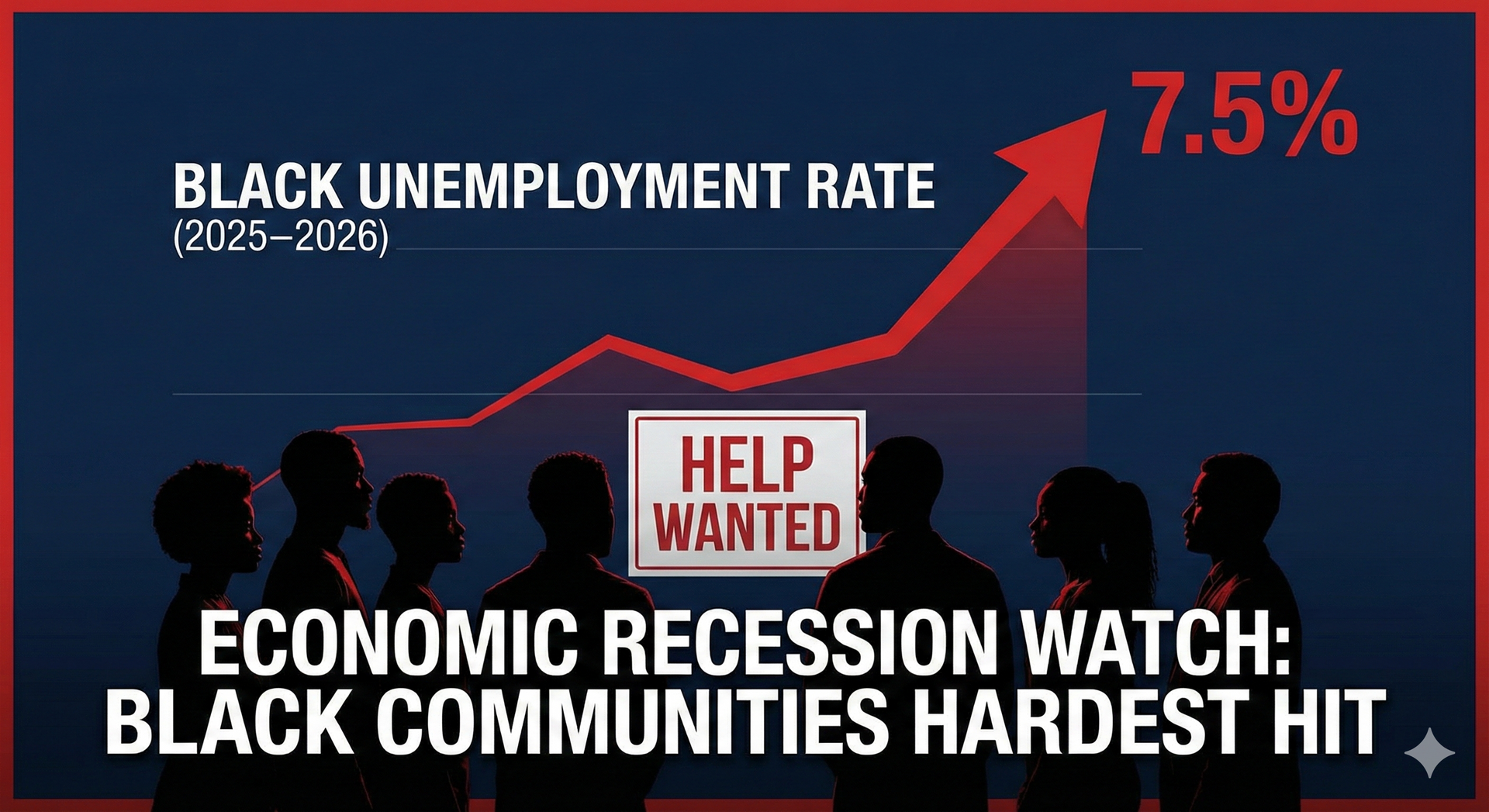

Black Unemployment Surges to 7.5%
By Jeremy Martin • January 21, 2026

Economic data for January 2026 shows a worrying trend: Black unemployment hit 7.5% by the end of 2025, significantly higher than the national average. The "State of the Dream 2026" report characterizes this as a "Black Recession," driven by instability in sectors where Black workers are overrepresented, such as government and retail.
- The Scoop: By Jan 2026, Black unemployment hit 7.5% (vs. ~4% national average), a stark increase signaling a specific "Black Recession."
- Impact on Black Culture & Community: This creates a crisis of stability. The "last hired, first fired" phenomenon is returning. This economic anxiety will likely ripple into culture, influencing music (more themes of hustle/survival) and politics (demand for tangible economic policy over symbolic gestures).
Never miss out on money moves again!
Sign up to get industry insights, trends, and more in your inbox.
Contact Us
Thank you for contacting us.
We will get back to you as soon as possible.
Oops, there was an error sending your message.
Please try again later.
SHARE THIS
Featured
Latest Posts

By Jeremy Martin
•
January 21, 2026
In a significant win for Black-led innovation in biotech/health-tech, Alveus Therapeutics (highlighted in recent "Black Innovation" roundups) has exited stealth mode with a massive $160 million in funding.The company is developing alternatives to popular weight-loss drugs like Ozempic, positioning itself as a major player in the life sciences sector for 2026. The Scoop: In a massive win for biotech, Alveus Therapeutics launched with $160 million in Series A funding on January 8. They are developing next-gen oral drugs for obesity and metabolic disease that could rival Ozempic. Impact on Black Culture & Community: This is a dual-impact story. Economically, it showcases Black leadership in the high-stakes world of biotech venture capital. Culturally, it addresses a health equity crisis ; metabolic diseases disproportionately affect Black communities due to systemic food apartheid. A Black-led company solving this issue implies a solution that might prioritize accessibility and trust in medical systems where it has historically been lacking.